
What Does Executive Casual Actually Mean For A High-Stakes Client Meeting?
What Does Executive Casual Actually Mean for a High-Stakes Client Meeting?
An executive stylist’s guide to dressing with authority, credibility and confidence when the dress code is relaxed but the stakes are high.
“Executive casual” sounds simple enough. Until you have an important client meeting, a significant pitch or a negotiation that could shape the next stage of your business.
Do you wear a suit? Tailoring without a jacket? Smart trousers and knitwear? And how relaxed is too relaxed when you need to establish credibility from the moment you walk into the room?
For senior leaders, founders and ambitious professionals, executive casual is not simply a softer version of corporate dressing. It is the ability to understand the context, read the room and make considered choices that communicate the right level of authority without looking overly formal or out of place.
Because when the stakes are high, what you wear should support the conversation you are there to have, not distract from it.
1. Executive casual is about judgement, not just clothes
One of the biggest misconceptions about executive casual is that it means dressing down.
In reality, it requires a different kind of judgement. When a traditional suit and tie are no longer expected, the individual has to make more decisions about structure, proportion, fabric, colour and overall presentation.
There is no single uniform that defines executive casual. The right approach depends on your industry, the culture of the organisation, the seniority of the people in the room and, crucially, the purpose of the meeting.
A relaxed internal catch-up with colleagues is very different from presenting to a prospective client, meeting a board for the first time or negotiating a significant commercial agreement.
The more consequential the meeting, the more intentional your choices should be.
The objective is not necessarily to look the most formally dressed person in the room. It is to look appropriate, considered and credible — someone who understands the environment they are operating in.
2. Understand the stakes before choosing the outfit
Before deciding what to wear, consider three things.
Who are you meeting?
Are you meeting an established client who already knows you, a prospective client you need to impress, or a senior decision-maker who has never met you before?
With an established relationship, you may have more freedom to adopt a relaxed approach. When trust is still being established, a little more structure can help communicate professionalism and attention to detail.
What do you need to achieve?
Are you sharing an update, pitching for new business, presenting a strategy, discussing fees or negotiating a significant contract?
The more you need to establish confidence in your judgement, expertise or leadership, the more important it is to consider how your appearance supports that message.
What does the environment expect?
A technology founder meeting another founder may need a different approach from a financial services executive meeting a prospective institutional client. Neither is inherently more professional than the other. They simply operate within different expectations.
The most effective executive casual wardrobe responds to these differences without losing your own identity.
3. The foundation: relaxed structure
When I advise clients on executive dressing, I look at the balance between structure and ease.
Too much structure can feel unnecessarily corporate in a relaxed environment. Too little can undermine the sense of polish you want to communicate in a high-stakes situation.
The solution is often to retain one or two structured elements while allowing the rest of the outfit to feel more relaxed.
For example:
For women
A tailored blazer worn with fine knitwear and soft pleat skirt can feel authoritative without looking overly formal. Alternatively, a beautifully cut trouser and a silk blouse with contemporary minimalist jewellery can create a polished look, with or without the jacket.
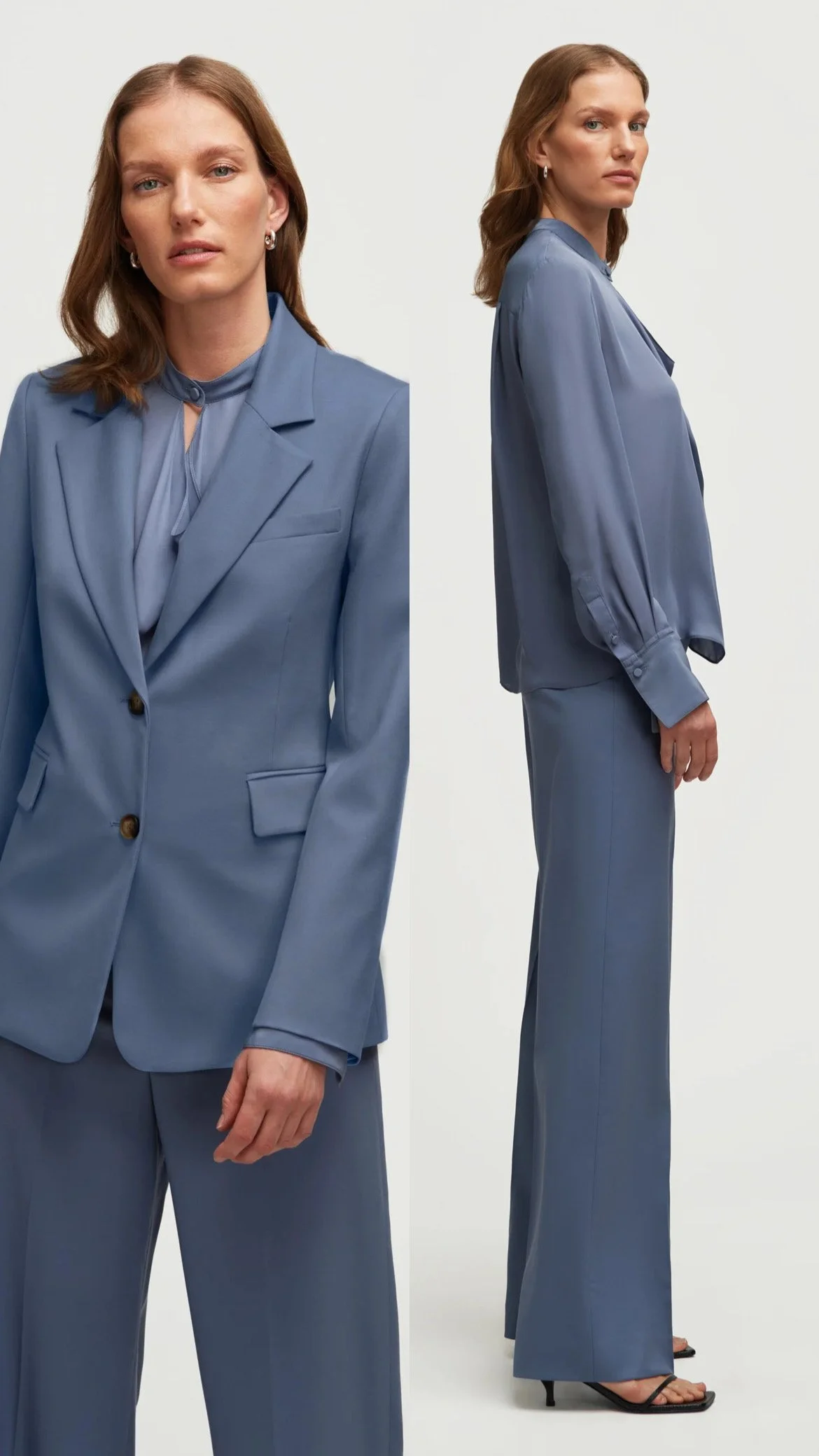
Argent
A dress can work equally well, provided the cut, fabric and styling feel appropriate to the setting. Clean lines and thoughtful proportions often create more impact than elaborate detailing.
For men
A softly structured blazer with tailored trousers and a merino knit or quality polo shirt can bridge the gap between formal businesswear and casual dressing.
A suit worn without a tie may also work, particularly when the fabric and fit feel contemporary rather than overly corporate. In a more relaxed environment, tailored trousers with a doublet or quality knit can provide a considered alternative.
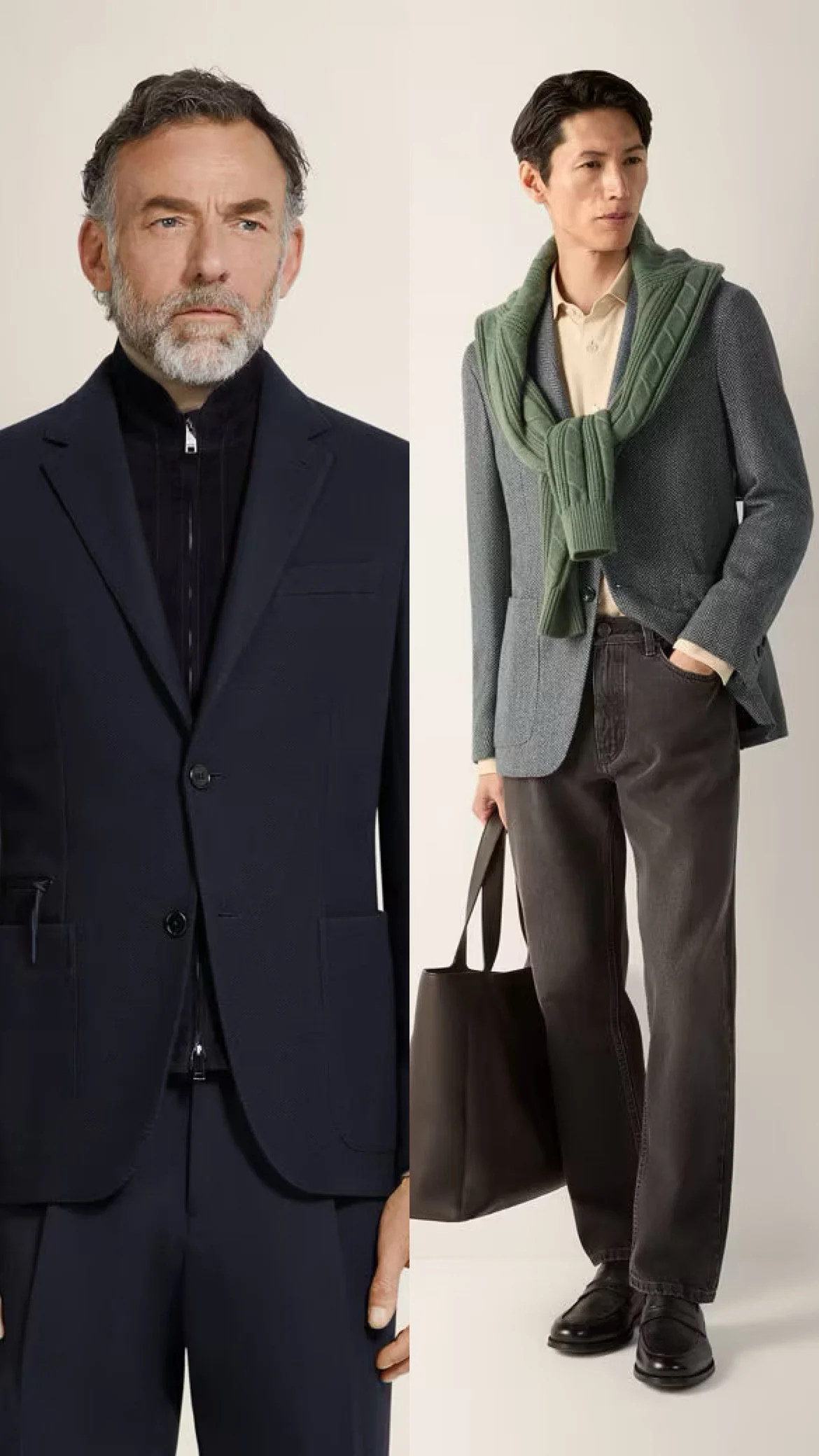
Zegna
The principle is the same for everyone: retain enough structure to communicate intention, while allowing enough ease to reflect the setting.
4. Fabric, fit and condition do more work than you might think
When an outfit is less formal, the quality of the individual pieces becomes more noticeable.
A traditional suit provides a certain degree of structure automatically. In executive casual dressing, there is less to hide behind. The cut of a jacket, the drape of a trouser, the fluidity of a knit and the condition of your shoes all contribute to the overall impression.
This is why I place so much emphasis on fit, fabric and longevity when working with clients.
Look for pieces that sit properly on the body, hold their shape and move comfortably throughout the day. Natural fibres such as wool, cotton and linen can be useful choices, depending on the garment, climate and setting. Quality blends can also perform extremely well.
Pay attention to the details:
* Shoulders that sit correctly and sleeves that finish at the right point
* Trousers that fall cleanly without excessive pooling or pulling
* Knitwear that holds its shape rather than looking stretched or tired
* Shirts and blouses that are clean, pressed and appropriate for the setting
* Shoes and accessories that are well maintained
None of these details needs to be conspicuous. In fact, the strongest executive outfits are often the ones where everything feels right without any single element demanding attention.
5. Colour: create authority without becoming predictable
Colour is another opportunity to make executive casual work harder for you.
Navy, charcoal, black, cream, taupe and other considered neutrals can provide a versatile foundation. They are relatively easy to combine and can create a sense of coherence across different levels of formality.
But executive dressing does not have to mean wearing head-to-toe neutrals.
Burgundy, deep green, muted blue, camel brown and other well-chosen colours can introduce personality while retaining a professional feel. The key is to consider the overall effect, rather than treating particular colours as guaranteed signals of authority.
For a high-stakes client meeting, think about the balance of contrast, the effect of the colours together and how they relate to your own features and personal style.
A navy blazer with a cream knit, for example, can feel polished and approachable. A charcoal outfit with a subtle burgundy accent may feel more distinctive without becoming distracting.
The aim is not to dress in a way that attracts attention for its own sake. It is to create a coherent visual impression that supports the person you are there to represent: yourself, your expertise and, often, your business.
6. Shoes and accessories: the details that complete the picture
Accessories can make an executive casual outfit feel finished, but they should be chosen with the same discernment as the main pieces.
Shoes are particularly important because they influence the overall formality of an outfit. A refined loafer, a clean leather flat, an elegant low heel or a well-maintained minimalist shoe can work beautifully, depending on the setting and the rest of the look.
For men, a polished loafer, derby or understated leather trainer may be appropriate in different environments. The important distinction is whether the choice looks intentional and belongs with the outfit.
The same applies to bags, belts, watches and jewellery. Consider proportion, condition and visual consistency.
You do not need multiple statement pieces. Often, one considered detail is enough.
And remember that executive casual does not mean everything must be overly-expensive or carry a recognisable designer label. Fit, condition, proportion and suitability matter far more than visible branding.
7. The mistakes that can undermine executive casual
When a dress code becomes more relaxed, it is easy to assume that almost anything goes. For a high-stakes meeting, there are a few common pitfalls worth avoiding.
Dressing too casually for the relationship. What works for a familiar colleague may not be the best choice for a prospective client or a first meeting with a board.
Confusing comfort with informality. Comfortable clothing can look exceptionally polished. The issue is not comfort; it is whether the pieces look considered and appropriate.
Wearing something that does not fit properly. Even an expensive garment can look unconvincing if the proportions are wrong.
Overcompensating with formality. Arriving in a highly formal outfit when everyone else is relaxed can create an unnecessary sense of distance. Authority does not always require a full suit.
Trying an unfamiliar look on the day. A high-stakes meeting is not the time to discover that your new trousers crease badly, your shoes are uncomfortable or your jacket does not sit properly when you move.
Forgetting the practical details. Wrinkled clothing, scuffed footwear, a tired bag or an outfit that requires constant adjustment can undermine an otherwise strong look.
The best approach is to make deliberate decisions in advance, rather than relying on last-minute guesswork.
8. A clear framework for getting it right
If you are unsure what executive casual should look like for an important meeting, start with this framework:
One structured piece + one relaxed piece + considered finishing details.
That might mean:
* A blazer, fine knit and tailored trousers
* A quality shirt, tailored trousers and refined leather shoes
* A well-cut dress with a structured jacket and understated accessories
* A softly structured suit, worn without a tie and finished with appropriate shoes
Adjust the level of formality according to the industry, the relationship and the importance of the meeting.
If you are still uncertain, it is generally easier to start slightly more polished and remove a layer or relax a detail than to arrive feeling underdressed and spend the meeting worrying about it.
Most importantly, wear something you have already tested. You should be able to sit, stand, walk and present without thinking about your clothes.
9. Your wardrobe should support your professional identity
Ultimately, executive casual is not a fixed dress code. It is a judgement call.
The most effective outfit is one that reflects the environment, respects the occasion and feels consistent with the professional identity you want to communicate.
For senior leaders and founders, that means having a wardrobe that works across different situations: formal board meetings, client presentations, networking events, internal leadership days and the less predictable moments in between.
You should not need to reinvent your appearance every time the dress code changes. With the right foundations, a relatively small number of well-chosen pieces can work together across a wide range of professional settings.
This is where a considered wardrobe strategy makes a real difference. It reduces decision fatigue, improves versatility and gives you the confidence to focus on the meeting itself.
Because your clothes cannot replace your expertise, preparation or judgement. But they can help ensure that your appearance is consistent with them.
The takeaway
Executive casual is not about dressing down. It is about dressing with discernment.
When the stakes are high, the objective is to look credible without being rigid, approachable without being overly relaxed, and polished without appearing as though you have tried too hard.
The strongest professional style is rarely about wearing more. It is about making the right choices for the situation and knowing why they work.
Executive casual requires a considered balance of authority, approachability and discernment — particularly in high-stakes client meetings, where your presence is as influential as your expertise.
If you’re C-suite, a senior executive, founder or ambitious professional looking to ensure your wardrobe reflects the level at which you operate, a more strategic approach to personal presentation makes a meaningful difference.
For tailored guidance on refining your executive presence through clothing, and building a wardrobe that works as hard as you do, please get in touch to discuss how I can support you.