
What Founders Should Wear When Pitching
What Founders Should Wear When Pitching
When you’re pitching your business, what you wear probably isn’t the first thing on your mind.
You’re thinking about the numbers, your proposition, your story.
The questions you’re likely to be asked and how you’re going to communicate your vision with confidence.
But before you say a word, your appearance has already communicated something.
Your clothes won’t secure investment, win the deal or make a weak pitch stronger. But when they are right, they can support your credibility, confidence and executive presence - allowing your audience to focus on what you are saying rather than being distracted by what you’re wearing.
So, what should founders wear when pitching? The answer isn’t simply “a suit” or “smart casual”. There is no one size fits all.
The right outfit depends on who you are pitching to, where you are pitching, your industry, your personality and, importantly, the impression you want to create.
The goal is to look like yourself - albeit a considered, confident version of yourself.
Dress for the room, not a stereotype
One of the biggest mistakes founders can make is dressing according to what they think a founder is supposed to look like.
The stereotypical founder might be pictured in jeans, a T-shirt and trainers. Or perhaps a hoodie. But if that's not you, there's no reason to dress that way simply because you've heard that "founders dress casually".
Equally, if you're naturally relaxed and understated, you don't necessarily need to put yourself into a formal suit because you believe investors expect it.
Consider the context first.
Who are you meeting?
What is the culture of the organisation or investment firm?
What industry are you operating in?
Where is the meeting taking place?
And what level of formality will make you feel credible without making you feel uncomfortable?
A pitch to a creative business may call for something quite different from a presentation to a private equity firm, professional services organisation or corporate board.
Your clothes should demonstrate that you understand the environment you're entering.
Your clothes should support your personal brand
As a founder, you're not only representing yourself, you're representing your business. That means your appearance is part of your personal brand so think about the qualities you want people to associate with you.
Is it:
Credibility?
Authority?
Innovation?
Approachability?
Creativity?
Expertise?
Reliability?
Confidence?
Your clothes can help reinforce those attributes.
For example, a founder working in a highly innovative sector may want their appearance to feel contemporary and progressive, while still looking credible in front of investors.
A founder in a more traditional professional environment may want to communicate authority and trust while avoiding looking overly corporate.
There isn't a right or wrong answer. The important question is: Does what I'm wearing support how I want to be perceived?
Investing in the best quality you can afford
Personally, I’m not a fan of designer logos or any clothing that is '“too obvious”, in the way of it shouting designer superbrands. In fact, obvious displays of wealth can sometimes distract from the impression you're trying to create.
I do however, advise my clients invest the very most they can afford as fit, proportion, fabric and drape are of the upmost importance. Minimalist, clean, high quality brands I champion and steer clients towards include:
Ralph Lauren
Max Mara
Victoria Beckham
Zegna
Paul Smith
Theory
Hackett
Gabriela Hearst
Vince
Pal Zaleri
Joseph
Harris Wharf London
A well-cut jacket in a beautiful fabric can look far more sophisticated than an overly “showy” garment that doesn't fit properly.
The same applies to shoes, knitwear, shirts, trousers, dresses and accessories - you want your clothes to look intentional. Not necessarily the height of fashion/trend-led. Just considered and quietly expensive.
What should male founders wear when pitching?
There are plenty of options beyond the traditional business suit.
For a more formal pitch, a well-tailored suit can still be an excellent choice. Keep the styling clean and let the quality of the fit do the work.
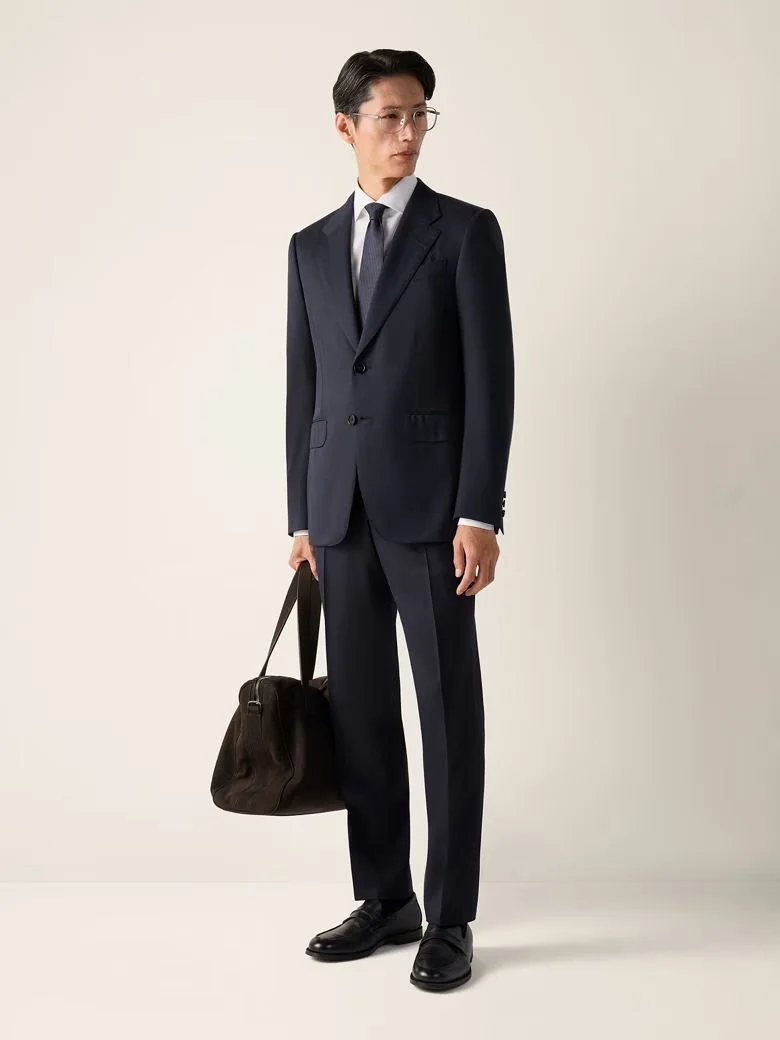
For a less formal environment, consider a tailored jacket with an open-neck shirt, fine knitwear or a smart polo, paired with well-cut trousers or sophisticated chinos.
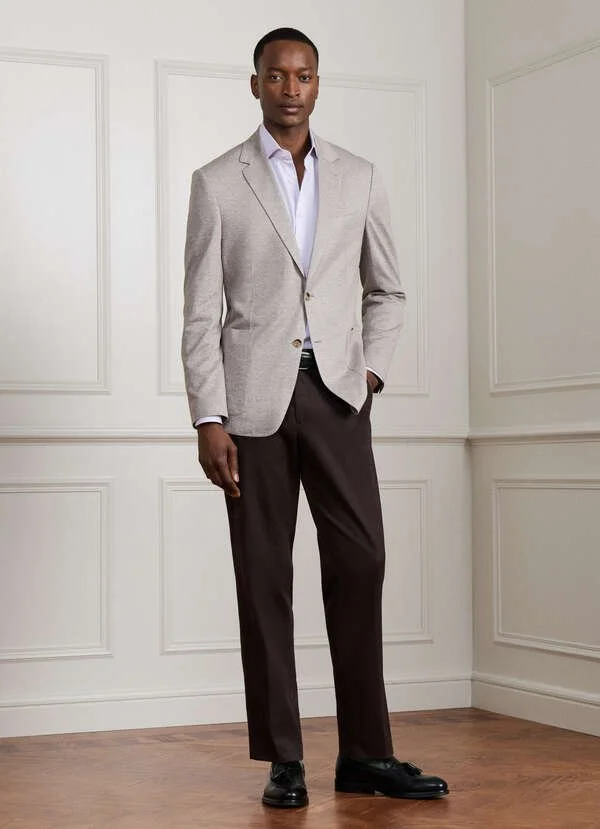
Colour can also play a role. Navy, charcoal, stone, grey and other neutral understated tones can create a polished foundation, while texture or a subtle accent can add personality.
And don’t overlook the details. Shoes should be clean and appropriate, belts should work with the overall look and shirts should fit properly around the neck and shoulders. If you're wearing a jacket, make sure it sits correctly when you're standing and when you're seated.
The objective isn't to look like someone else's idea of a successful founder, it's to look like a credible version of yourself.
What should female founders wear when pitching?
Women have a huge amount of choice when it comes to pitching attire, which can be liberating – but can also make the decision more complicated.
A tailored jacket with trousers, a sophisticated dress, a skirt and knitwear, or a combination of beautifully cut separates can all work.
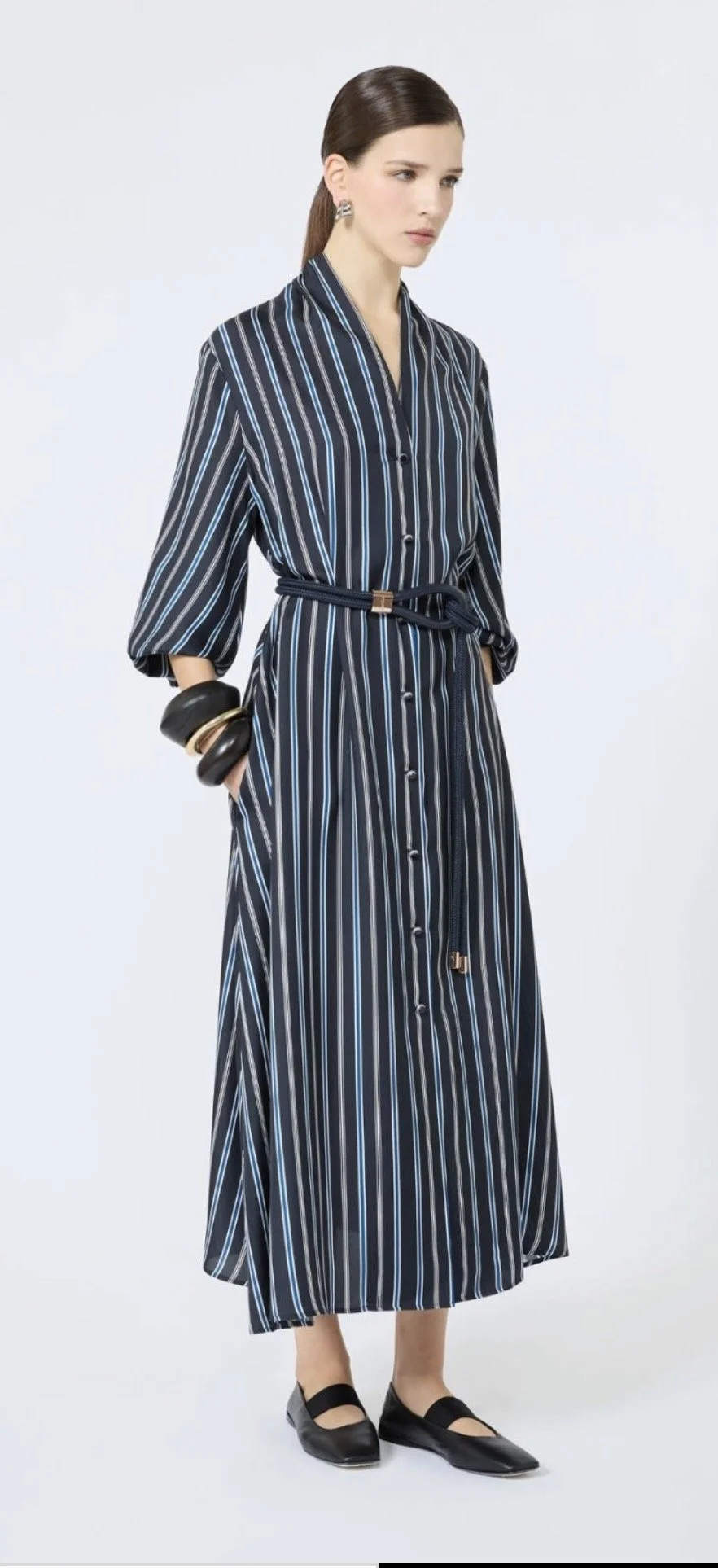
The same principle applies: consider the environment, your audience and the qualities you want your appearance to communicate.
Don't feel that you have to dress in a traditionally masculine way to communicate authority.
Equally, there is nothing wrong with choosing a more structured look if that makes you feel confident and empowered. The key is that your clothing should support your presence rather than make you feel self-conscious.
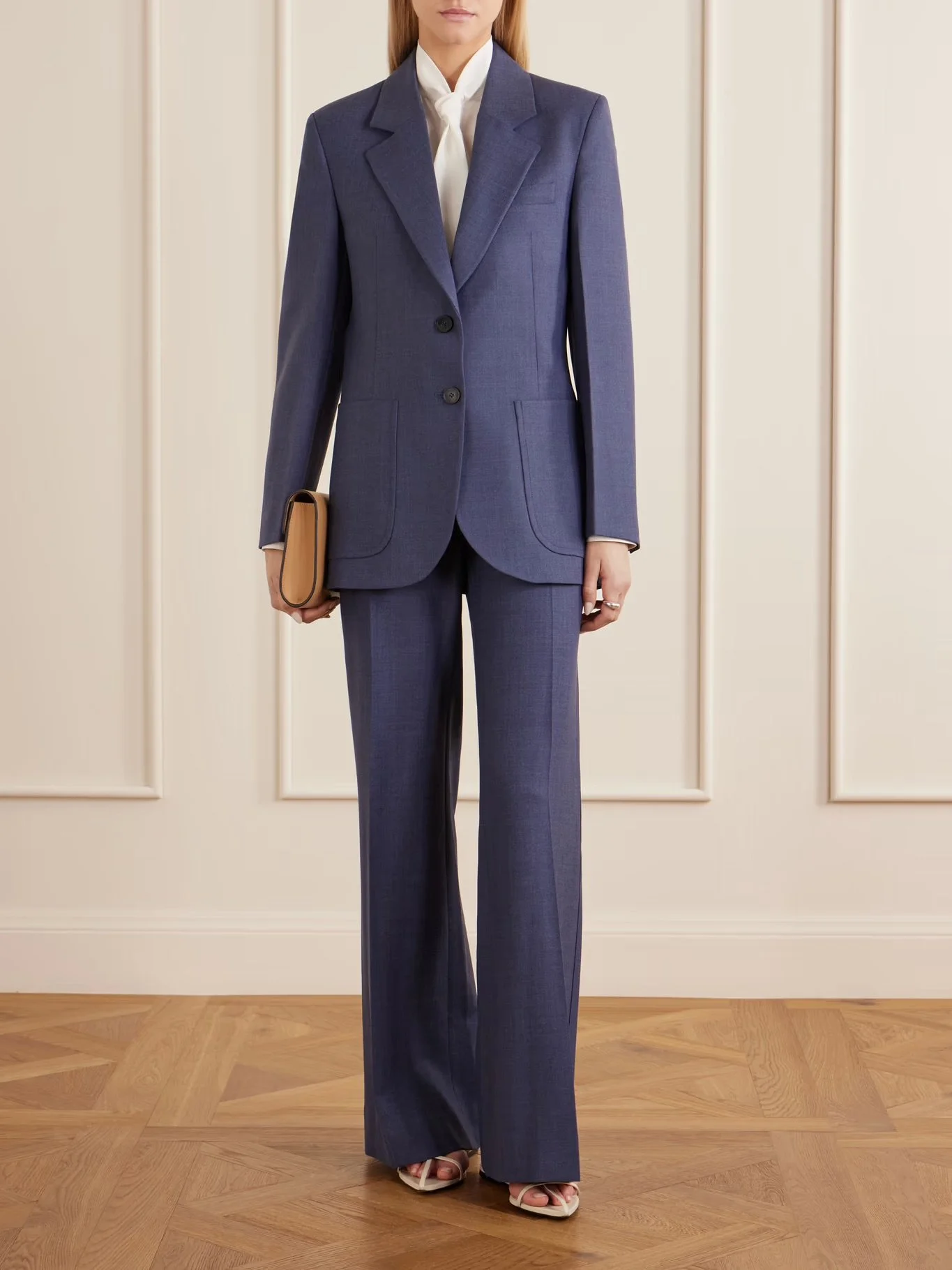
If you're constantly adjusting your skirt, worrying about a neckline, pulling down a jacket or thinking about your shoes being uncomfortable, some of your attention is being taken away from the pitch.
The best pitching outfit is often the one you stop thinking about once you've put it on.
Choose comfort – but don't confuse comfort with casual
You may be presenting for an hour, travelling across London, sitting in a boardroom, standing beside a screen or appearing on camera and your outfit needs to work with you.
That doesn't mean turning up in loungewear, it means choosing clothes that allow you to move, sit, stand and present without constantly adjusting them.
Consider what happens when you sit down.
Does your jacket pull?
Does your shirt gape?
Does your trouser waistband feel restrictive?
Does your dress ride up?
Are your shoes comfortable enough to stand in?
These may sound like small details, but when you're pitching, small distractions can become surprisingly significant.
Be authentic – but don't underestimate preparation
There's a difference between being authentic and being unprepared - your audience should see you.
But that doesn't mean wearing whatever you happened to pick up that morning. Your pitching outfit deserves the same preparation as your presentation.
Try it on beforehand.
Sit down in it.
Stand up.
Walk around.
Present in it.
If you're pitching on camera, check how the colours and proportions appear on screen.
And if you're planning to wear something new, don't make the day of your pitch its first outing.
You want to know exactly how it feels before you walk into the room.
Think beyond the clothes - your overall appearance is made up of much more than your outfit.
Hair, grooming, glasses, shoes, accessories and yes, your bag or briefcase all contribute to the overall impression.
For both men and women, these details don't need to be elaborate, they simply need to look intentional and appropriate.
Think of your appearance as a complete picture rather than a collection of individual items; one beautiful jacket won't necessarily create a polished image if everything else feels disconnected.
Equally, a simple outfit looks incredibly sophisticated when the fit, grooming, shoes and accessories are all working together.
What about colour when pitching?
Colour can be a useful tool, particularly when you're thinking about personal branding.
You don't necessarily need to wear navy because it's "reliable” or red because it's "confident".
Instead, consider the colours that make you feel good and that work with your natural colouring, your brand and the environment you're entering.
If your personal brand is understated and sophisticated, a neutral palette with interesting texture might communicate that beautifully.
If creativity is central to your brand, you might introduce colour through a jacket, knit, blouse, shirt, scarf or accessory.
The aim isn't to create a formula, it's to create coherence between who you are, what you do and how you show up.
Avoid the last-minute shopping panic
One of the most common mistakes I see is leaving an important event until the last minute.
Suddenly you're buying an entirely new outfit because you have a pitch next week and that can create more problems than it solves.
Instead, build a reliable pitching wardrobe.
Have a few outfits you know work:
Know which jacket makes you feel confident.
Know which trousers or skirt fit beautifully.
Know which shoes you can comfortably stand in.
Know which colours make you feel your best.
Then, when an important opportunity comes along, you're not starting from scratch, you're simply choosing the right combination.
The most important thing you're wearing is confidence
Ultimately, your clothes are there to support the pitch – not replace it.
Your investors, clients or potential partners need to hear your expertise, understand your proposition and believe in your vision.
Your appearance should make it easier for you to communicate all of that.
When you feel comfortable, credible and like yourself, you can focus on the conversation rather than your clothes. And that's the real objective.
Don't dress to impress. Dress to reinforce the impression you want to make.
Your pitch is about your business and your clothes are simply part of the story.
Need help creating a founder wardrobe that works for you?
Your personal style can be a strategic part of your professional presence. I work with founders, executives and senior professionals to create wardrobes that reflect who they are, what they do and how they want to be perceived.
Whether you're preparing for an important pitch, stepping into a new leadership role or simply want your wardrobe to work harder for you, I can help you create a considered, contemporary wardrobe that gives confidence when it matters.
Explore my executive styling services or get in touch by clicking the button below, to discuss how we can work together.